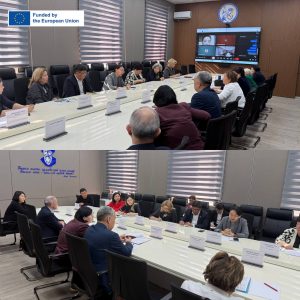
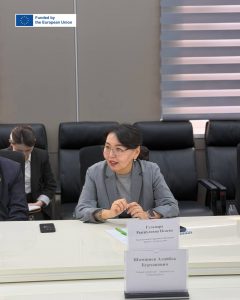
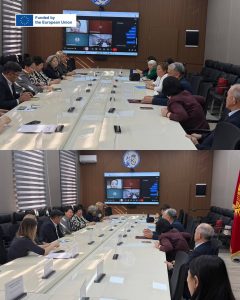
On 20 February 2026, a coordination meeting on the implementation of Erasmus+ CBHE projects was held at Kyrgyz National University named after J. Balasagyn (KNU). The meeting was organised by the National Erasmus+ office in Kyrgyzstan with the support of the university leadership in order to ensure quality implementation, effective coordination, and compliance with Erasmus+ programme requirements.
The meeting brought together 21 participants, including 3 colleagues who joined online. Among them were 2 representatives of the National Erasmus+ Office in the Kyrgyz Republic, 13 representatives from KNU, 1 representative from Kyrgyz-Turkish Manas University, 3 representatives from Naryn State University, and 2 representatives from the NGO European Documentation Center. The meeting demonstrated strong gender representation, with 6 men and 15 women participating in the discussion.
The primary focus of the meeting was the implementation of Erasmus+ projects in which KNU is involved, particularly those that were successfully awarded grants in 2025. Special attention was given to the following Capacity Building in Higher Education (CBHE) projects:
-
“Digital Transformation of Inclusive Doctoral Education in the Kyrgyz Republic (D-TIDE-KG)”
-
“Greening Water Education for Sustainable Development in Central Asia (GreenCA)”
Participants reviewed the current stage of project implementation, key deliverables, financial and reporting obligations, and adherence to Erasmus+ procedures and visibility requirements. Representatives of the National Erasmus+ Office provided guidance on compliance with programme rules, internal coordination mechanisms, and quality assurance standards to ensure smooth and transparent project management.
An important part of the discussion was dedicated to institutional coordination and internal governance of the projects. Working group members, including academic coordinators, introduced themselves and presented updates on ongoing activities, upcoming milestones, and challenges encountered during the initial phase of implementation.
The meeting also addressed the potential accession of Naryn State University to Kyrgyz National University and examined the possible implications of this institutional process for Erasmus+ projects in which Naryn State University is involved. Participants analysed potential administrative, financial, and contractual considerations to ensure continuity and stability in project implementation.
The coordination meeting provided a valuable platform for open dialogue, strengthening cooperation between partner institutions, and aligning efforts to achieve project objectives effectively and on time. It reaffirmed the shared commitment of all stakeholders to high-quality implementation of Erasmus+ projects and to further strengthening international cooperation in higher education in the Kyrgyz Republic.